While there are many issues across Canada, I’ve chosen to focus on one of the most recent ones. Canada has a big issue with its criminal justice system. Take the Colten Boushie trial, for example.
What happened to Colten (It’s a Buzzfeed article, but it has a good summary of all the events than multiple articles about different pieces)
“On Feb. 10, an all-white jury found Saskatchewan farmer Gerald Stanley not guilty in the death of Colten Boushie, a 22-year-old Cree man. The decision has led to an outpouring of anger and grief across Canada, with many Indigenous people decrying the result as a product of entrenched racism in Canadian society.”
“Not guilty verdict in death of Colten Boushie is ‘black eye’ for Canada, says Indigenous leader.”
To move forward with reconciliation, authentic Indigenous voice is integral. Check out the excellent film Indian Horse! It is a WONDERFUL movie based on the WONDERFUL novel by Richard Wagamese. It is difficult to watch at times, but it showcases the residential school experience, the struggles afterwards and how Indigenous people are moving forward. It is something we ALL need to understand and appreciate to break down stereotypes and bring reconciliation.
You should also check out Tanya Talaga’s book Seven Fallen Feathers about the deaths of high school students in Thunder Bay, ON, and the systemic racism that exists in Northern Ontario. There is much we can do as individuals to just become aware of what is going on around us to push Canada to be better.
Importance of Reconciliation:
Take some time this summer to make connections with an Indigenous community by attending events or visiting a nation to learn more about them.
As a history and English teacher, it is so important to me to infuse First Nations, Métis and Inuit history, culture, perspective and voice into the curriculum, because they are PART OF CANADA and PART OF THE WORLD. Why shouldn’t they be included!? While it is great to have Indigenous Studies courses (that aren’t yet mandatory), all teachers should have professional development on this subject to educate all Canadian youth, and to allow those First Nations, Métis and Inuit students to feel represented in their learning environments.
Last thing – check out last year’s performance of Indigenous music at the Juno Awards featuring A Tribe Called Red, Black Bear Singers and Tanya Tagaq – it’s awesome!
While there are many issues across Canada, I’ve chosen to focus on one of the most recent ones. Canada has a big issue with its criminal justice system. Take the Colten Boushie trial, for example.
What happened to Colten (It’s a Buzzfeed article, but it has a good summary of all the events than multiple articles about different pieces)
“On Feb. 10, an all-white jury found Saskatchewan farmer Gerald Stanley not guilty in the death of Colten Boushie, a 22-year-old Cree man. The decision has led to an outpouring of anger and grief across Canada, with many Indigenous people decrying the result as a product of entrenched racism in Canadian society.”
“Not guilty verdict in death of Colten Boushie is ‘black eye’ for Canada, says Indigenous leader.”
To move forward with reconciliation, authentic Indigenous voice is integral. Check out the excellent film Indian Horse! It is a WONDERFUL movie based on the WONDERFUL novel by Richard Wagamese. It is difficult to watch at times, but it showcases the residential school experience, the struggles afterwards and how Indigenous people are moving forward. It is something we ALL need to understand and appreciate to break down stereotypes and bring reconciliation.
You should also check out Tanya Talaga’s book Seven Fallen Feathers about the deaths of high school students in Thunder Bay, ON, and the systemic racism that exists in Northern Ontario. There is much we can do as individuals to just become aware of what is going on around us to push Canada to be better.
Importance of Reconciliation:
Take some time this summer to make connections with an Indigenous community by attending events or visiting a nation to learn more about them.
As a history and English teacher, it is so important to me to infuse First Nations, Métis and Inuit history, culture, perspective and voice into the curriculum, because they are PART OF CANADA and PART OF THE WORLD. Why shouldn’t they be included!? While it is great to have Indigenous Studies courses (that aren’t yet mandatory), all teachers should have professional development on this subject to educate all Canadian youth, and to allow those First Nations, Métis and Inuit students to feel represented in their learning environments.
Last thing – check out last year’s performance of Indigenous music at the Juno Awards featuring A Tribe Called Red, Black Bear Singers and Tanya Tagaq – it’s awesome!
While there are many issues across Canada, I’ve chosen to focus on one of the most recent ones. Canada has a big issue with its criminal justice system. Take the Colten Boushie trial, for example.
What happened to Colten (It’s a Buzzfeed article, but it has a good summary of all the events than multiple articles about different pieces)
“On Feb. 10, an all-white jury found Saskatchewan farmer Gerald Stanley not guilty in the death of Colten Boushie, a 22-year-old Cree man. The decision has led to an outpouring of anger and grief across Canada, with many Indigenous people decrying the result as a product of entrenched racism in Canadian society.”
“Not guilty verdict in death of Colten Boushie is ‘black eye’ for Canada, says Indigenous leader.”
To move forward with reconciliation, authentic Indigenous voice is integral. Check out the excellent film Indian Horse! It is a WONDERFUL movie based on the WONDERFUL novel by Richard Wagamese. It is difficult to watch at times, but it showcases the residential school experience, the struggles afterwards and how Indigenous people are moving forward. It is something we ALL need to understand and appreciate to break down stereotypes and bring reconciliation.
You should also check out Tanya Talaga’s book Seven Fallen Feathers about the deaths of high school students in Thunder Bay, ON, and the systemic racism that exists in Northern Ontario. There is much we can do as individuals to just become aware of what is going on around us to push Canada to be better.
Importance of Reconciliation:
Take some time this summer to make connections with an Indigenous community by attending events or visiting a nation to learn more about them.
As a history and English teacher, it is so important to me to infuse First Nations, Métis and Inuit history, culture, perspective and voice into the curriculum, because they are PART OF CANADA and PART OF THE WORLD. Why shouldn’t they be included!? While it is great to have Indigenous Studies courses (that aren’t yet mandatory), all teachers should have professional development on this subject to educate all Canadian youth, and to allow those First Nations, Métis and Inuit students to feel represented in their learning environments.
Last thing – check out last year’s performance of Indigenous music at the Juno Awards featuring A Tribe Called Red, Black Bear Singers and Tanya Tagaq – it’s awesome!
As a history teacher, it is so important to me to infuse First Nations, Métis and Inuit history and culture into the curriculum, because they are PART OF CANADA and PART OF THE WORLD. Why shouldn’t they be included!? While it is great to have Native Studies courses (that aren’t yet mandatory), all teachers should have professional development on this subject to educate all Canadian youth, and to allow those First Nations, Métis and Inuit students to feel represented in their learning environments.
Some cool things!
You should follow @i-haz-a-rezervation – they provide really interesting historical and contemporary topics involving Indigenous peoples, and some other cool things, as well.
Another brief video discussing colonization and 500 years of history:
Happy National Aboriginal Day! Chi Miigwech for listening!
And with common topics this year of Reconciliation and Canada 150, it is important to note how the history of Canada is actually taught. Are we teaching the truth? Does Canada have its priorities straight? Here is an interesting article to consider the Indigenous perspective of Canada’s 150 years: https://nowtoronto.com/news/canada-s-150th-a-celebration-of-indigenous-genocide/
As a history teacher, it is so important to me to infuse First Nations, Métis and Inuit history and culture into the curriculum, because they are PART OF CANADA and PART OF THE WORLD. Why shouldn’t they be included!? While it is great to have Native Studies courses (that aren’t yet mandatory), all teachers should have professional development on this subject to educate all Canadian youth, and to allow those First Nations, Métis and Inuit students to feel represented in their learning environments.
Some cool things!
You should follow @i-haz-a-rezervation – they provide really interesting historical and contemporary topics involving Indigenous peoples, and some other cool things, as well.
Another brief video discussing colonization and 500 years of history:
Happy National Aboriginal Day! Chi Miigwech for listening!
And with common topics this year of Reconciliation and Canada 150, it is important to note how the history of Canada is actually taught. Are we teaching the truth? Does Canada have its priorities straight? Here is an interesting article to consider the Indigenous perspective of Canada’s 150 years: https://nowtoronto.com/news/canada-s-150th-a-celebration-of-indigenous-genocide/
As a history teacher, it is so important to me to infuse First Nations, Métis and Inuit history and culture into the curriculum, because they are PART OF CANADA and PART OF THE WORLD. Why shouldn’t they be included!? While it is great to have Native Studies courses (that aren’t yet mandatory), all teachers should have professional development on this subject to educate all Canadian youth, and to allow those First Nations, Métis and Inuit students to feel represented in their learning environments.
Some cool things!
You should follow @i-haz-a-rezervation – they provide really interesting historical and contemporary topics involving Indigenous peoples, and some other cool things, as well.
Another brief video discussing colonization and 500 years of history:
As a history teacher, it is so important to me to infuse First Nations, Métis and Inuit history and culture into the curriculum, because they are PART OF CANADA and PART OF THE WORLD. Why shouldn’t they be included!? While it is great to have Native Studies courses (that aren’t yet mandatory), all teachers should have professional development on this subject to educate all Canadian youth, and to allow those First Nations, Métis and Inuit students to feel represented in their learning environments.
Some cool things!
You should follow @i-haz-a-rezervation – they provide really interesting historical and contemporary topics involving Indigenous peoples, and some other cool things, as well.
Another brief video discussing colonization and 500 years of history:
As a history teacher, it is so important to me to infuse First Nations, Métis and Inuit history and culture into the curriculum, because they are PART OF CANADA and PART OF THE WORLD. Why shouldn’t they be included!? While it is great to have Native Studies courses (that aren’t yet mandatory), all teachers should have professional development on this subject to educate all Canadian youth, and to allow those First Nations, Métis and Inuit students to feel represented in their learning environments.
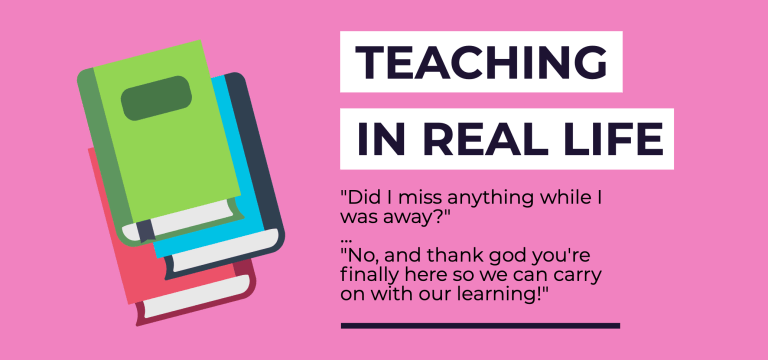


 Teaching In Real Life